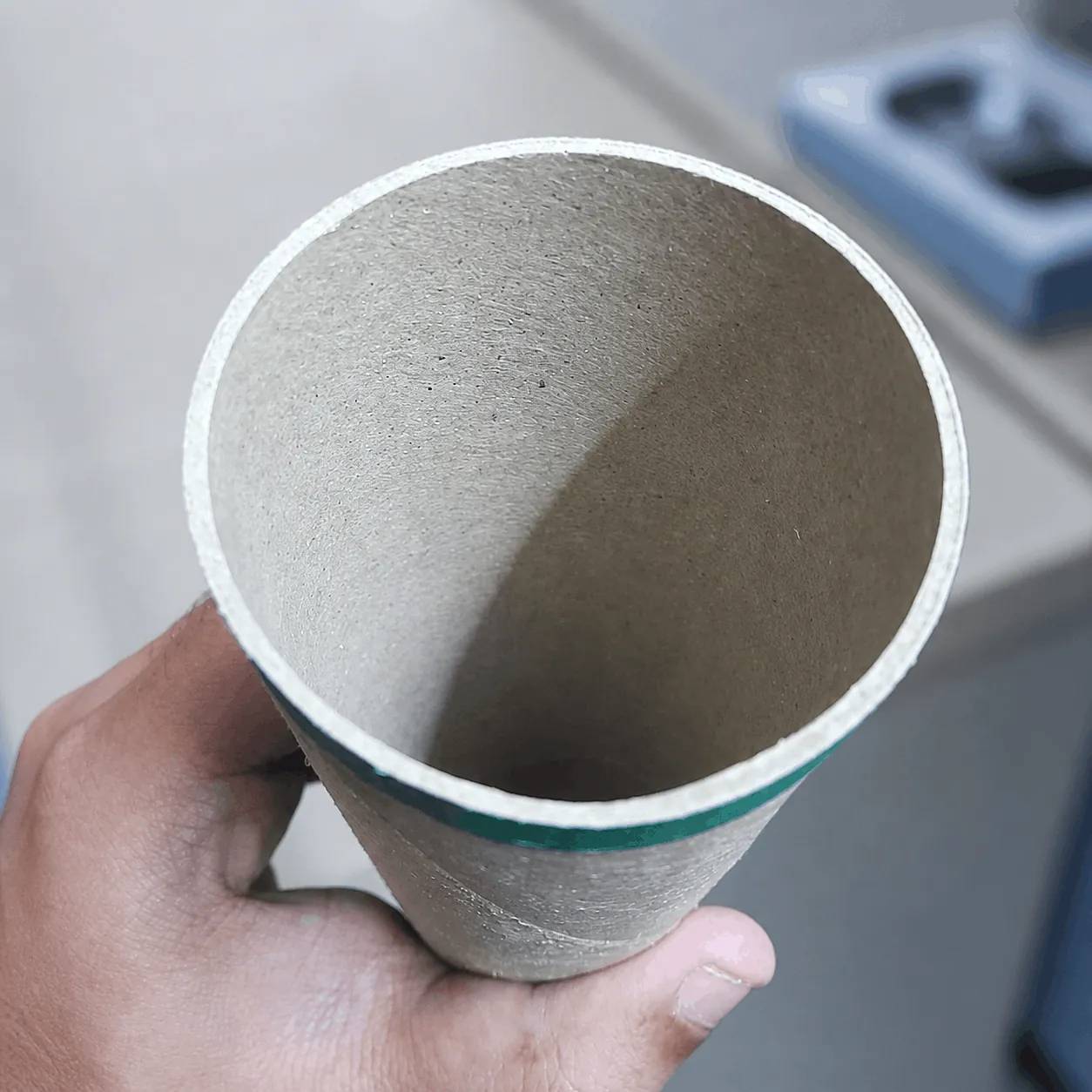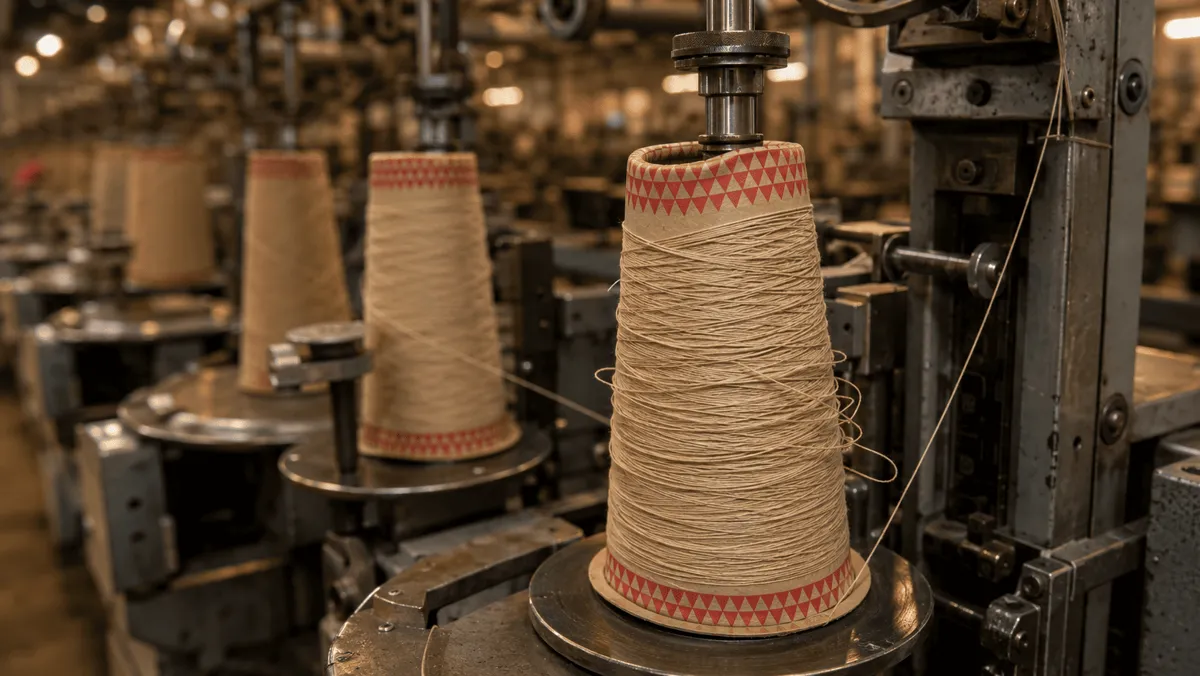
Short answer: most yarn package defects on automatic winders come from winding settings or the yarn itself, but a few start with the paper cone: slipping first layers, wobble from a poorly seated cone and damage at the nose or base. Checking the cone first takes minutes and rules it in or out before you change machine settings.
Start with one question: does the defect follow the cone?
Move a suspect cone lot to other winding positions and put your approved reference cones on the positions showing the defect. If the defect moves with the cones, look at the cone. If it stays with the positions, look at the machine. If it appears across every position after a yarn change, look at the yarn and its settings. Change one thing at a time and record what you changed.
Symptoms, likely causes and first checks
| Symptom | Possible cone-related cause | Other common causes | First check |
|---|---|---|---|
| First layers slip or the yarn tail comes loose at the start | Surface finish gives too little grip for the yarn | Low starting tension, yarn with low surface friction | Trial the same yarn on a cone with a different finish on the same position |
| Package wobbles or the cradle vibrates | Cone not seated squarely: bore out of tolerance, damaged nose or base, deformed body | Worn cradle bearings or cone holder, drum or package imbalance | Measure the bores of a suspect cone and compare with the approved drawing; inspect the holder |
| Ribbons or patterning (wraps stacking in bands) | Rarely the cone | Winding ratio between drum and package; pattern-breaking setting off or ineffective | Check the anti-patterning setting for the package diameter range |
| Stitches (yarn looping over the package edge) | Rarely the cone | Traverse reversal, tension at the package edges, yarn guide wear | Inspect traverse and edge settings on the affected positions |
| Sloughing (several coils come off together when unwinding) | Occasionally, slipping base layers on a smooth cone | Soft package, low winding tension, edge build, yarn liveliness | Compare package density and tension settings with a package that unwinds well |
| Entangled or lapped yarn at the package ends | Rough or damaged cone rim catching yarn | Suction and splicing faults, broken-end recovery, traverse at the ends | Inspect cone rims for splits or burrs, then review end-recovery settings |
| Wax deposits on or inside the package | Not the cone | Waxing device setting, wax roll condition, wax build-up on guides | Clean the waxing unit and check wax pick-up for the yarn |
| Bent or dented cone top (nose) | Cartons crushed or dropped in transit, usually during truck handling | Heavy cartons stacked on top, damp storage | Inspect cartons on arrival and set bent cones aside; they will not seat squarely on the holder |
| Collapsed or crushed cone under the package | Wall too weak for the package weight or winding pressure, moisture damage | Excessive cradle pressure, rough handling | Check storage conditions and ask the supplier for the approved wall specification |
Defect names vary between mills and machine makers. If your team uses a different term, describe what the package looks like and when the defect appears, and match it to the closest row.
What we hear from buyers
Our cones are formed on automatic machines, so shape varies little from one cone to the next. The cone problem buyers most often report to us is a bent top, and the cause is almost always handling: cartons crushed or dropped on trucks between our factory and the mill. A bent nose stops the cone seating squarely, which can show up on the winder as wobble or vibration. Check cartons when they arrive and keep damaged cones off the winding floor. Our packing and stacking guide explains how to avoid it.
What to record for each investigation
- Machine model, winding position numbers and the date and shift.
- Yarn type, count and lot, and the winding settings in use.
- Cone supplier, lot and drawing revision, and a few sample cones set aside.
- Photographs of the defect and of the cone nose, base and rim.
- What you changed, one factor at a time, and the result.
For slippage, vibration and collapse in more depth, see our cone slippage, vibration and collapse guide. To check a cone against its drawing, use the paper cone dimensions guide.
Send your winding-machine model, reference cone or drawing, taper, finish, quantity and destination through our sample and quotation form.
Frequently asked questions
Can a paper cone cause yarn package defects?
Yes, but only some. Slipping first layers, package wobble from a poorly seated cone and entanglement on a damaged rim can start with the cone. Patterning, stitches and wax deposits usually come from machine settings or the waxing unit.
How do I tell a cone problem from a machine problem?
Swap cones between positions. If the defect moves with the cones, check the cone lot against its drawing. If it stays with the winding positions, check the machine settings and parts on those positions.
Why do paper cones arrive with bent tops?
Almost always from handling in transit: cartons crushed under other loads or dropped during truck loading and unloading. Inspect cartons on arrival and set bent cones aside, because a bent nose will not seat squarely on the cone holder.