Short answer: yarn cone stacks fail when the weight rests on the cone noses or on deformed packages instead of on flat, even layers. Pack packages in rigid cartons or on pallets with layer sheets between tiers, keep every layer the same height, avoid overhang, and keep cones and cartons dry.
Why stacks and pallets fail
- Point loading: a tier resting on cone noses or package shoulders crushes the cones below and deforms the packages.
- Uneven layers: mixing package sizes or orientations in one layer leaves gaps, and the load shifts in transit.
- Weak or wet cartons: humidity softens corrugated board and paper cones, and stacked cartons lose strength.
- Overhang and loose wrapping: cartons hanging over the pallet edge or poorly wrapped pallets shift and lean.
Packing yarn packages
- Use cartons sized to the package so it cannot move, with dividers or a fitted insert between packages.
- Stand packages the same way throughout a carton and put a flat sheet between layers, so each layer carries the one above evenly.
- Protect the package surface from dust and moisture with a liner or poly bag where your buyer requires it.
- Keep one yarn lot and package size per carton, and label the lot, count and weight on the outside.
Palletizing
- Stack cartons in a stable pattern with layer sheets, and keep the load inside the pallet footprint.
- Use edge or corner protectors and stretch wrap, and strap the load if it will be moved by forklift several times.
- Agree the maximum stacking height with your forwarder and warehouse, and mark it on the load.
- For bags instead of cartons, fill them evenly and support the stack on all sides, as bags carry little weight on their own.
Packing empty paper cones
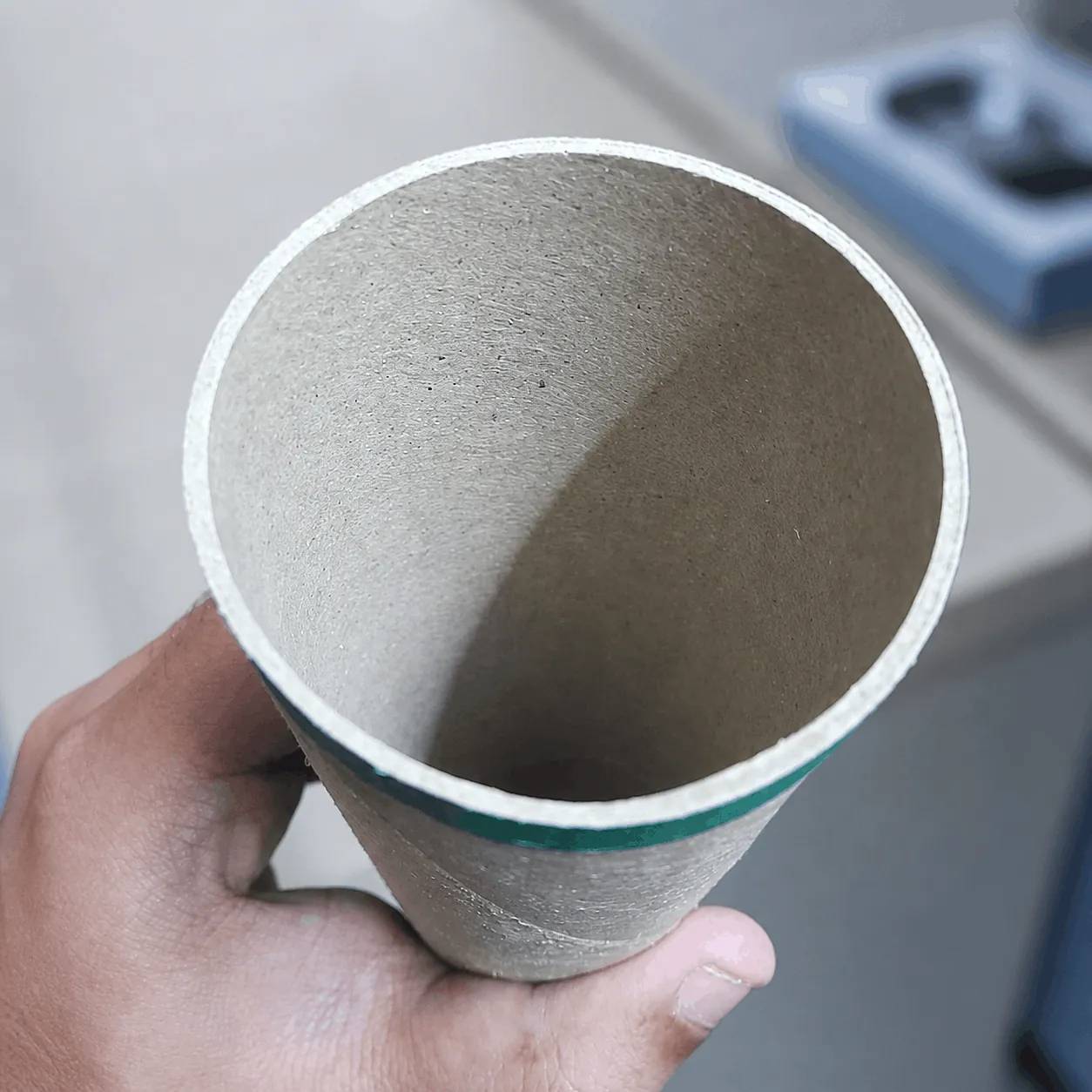
Empty paper cones are supplied nested inside each other in cartons. We pack about 250 cones per carton. That keeps each nested stack short: a longer stack is heavier at the bottom and easier to bend or crush. Confirm the carton dimensions and net and gross weight for your exact cone when you order.
The damage buyers occasionally report is a bent cone top, and it happens in transit when cartons are crushed under other loads or dropped while trucks are loaded and unloaded. To prevent it, stack cartons upright with the heaviest at the bottom, keep other goods off the top, don't throw or drop cartons, and store them dry and flat. A bent nose or base stops the cone seating squarely on the winder. See our packing and freight details.
Store and ship dry
Paper and corrugated board absorb moisture. Store cones and packed yarn off the floor in a dry, ventilated area, and ask your forwarder about container desiccants for long sea routes.
Send your winding-machine model, reference cone or drawing, taper, finish, quantity and destination through our sample and quotation form.
Frequently asked questions
Why do stacked yarn cones collapse?
Usually because the weight rests on cone noses or deformed packages instead of flat layers, or because damp cartons have lost strength. Layer sheets, even layers, dry storage and no overhang prevent most failures.
Should yarn be shipped in cartons or on pallets?
Both are common. Cartons protect each package, and pallets make handling faster and reduce damage from repeated lifting. Many shipments use cartons on pallets; agree the method with your buyer and forwarder.
How many paper cones are packed in one carton?
We pack about 250 empty paper cones per carton, so each nested stack stays short and is less likely to bend or crush. Carton dimensions and weights are confirmed for your exact cone with the quotation.