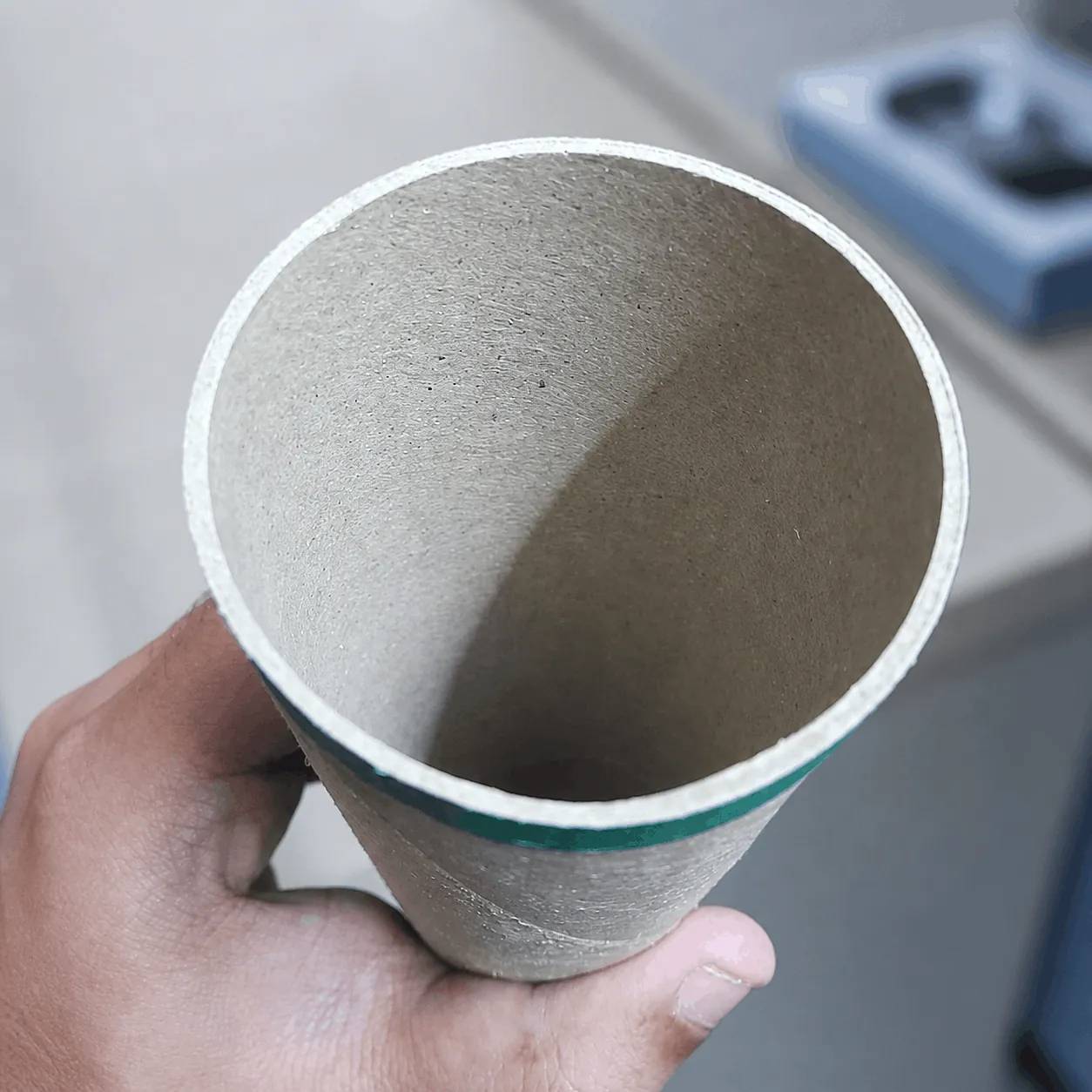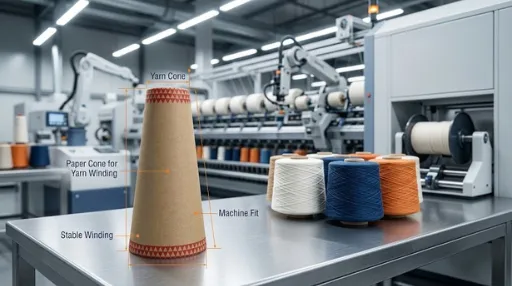
For product and order context, see our paper cones for spinning mills. Use this guide to prepare requirements for review; final acceptance follows your approved drawing and mill trial. This guide covers two related but distinct symptom groups on autoconers and winding machines: mechanical cone problems (slippage, vibration, collapse) and yarn-breakage or package-stability problems that can look cone-related but sometimes aren't. Work through the relevant section methodically rather than changing the cone specification as a first response.
Record the symptom before changing anything
Identify the machine, winding head, yarn, settings, cone specification and lot. Describe when the problem occurs: initial layers, sustained winding, doffing, transport or unwinding. Retain affected samples and an approved reference. A symptom alone is not proof of a defective cone — the same visible failure (a collapsed package, a broken end) can trace back to the cone, the yarn, the holder, or a machine setting, and the diagnostic path below is organized to help separate those causes rather than assume the cone first.
Part 1: Mechanical Cone Problems
Slippage or unstable starting layers
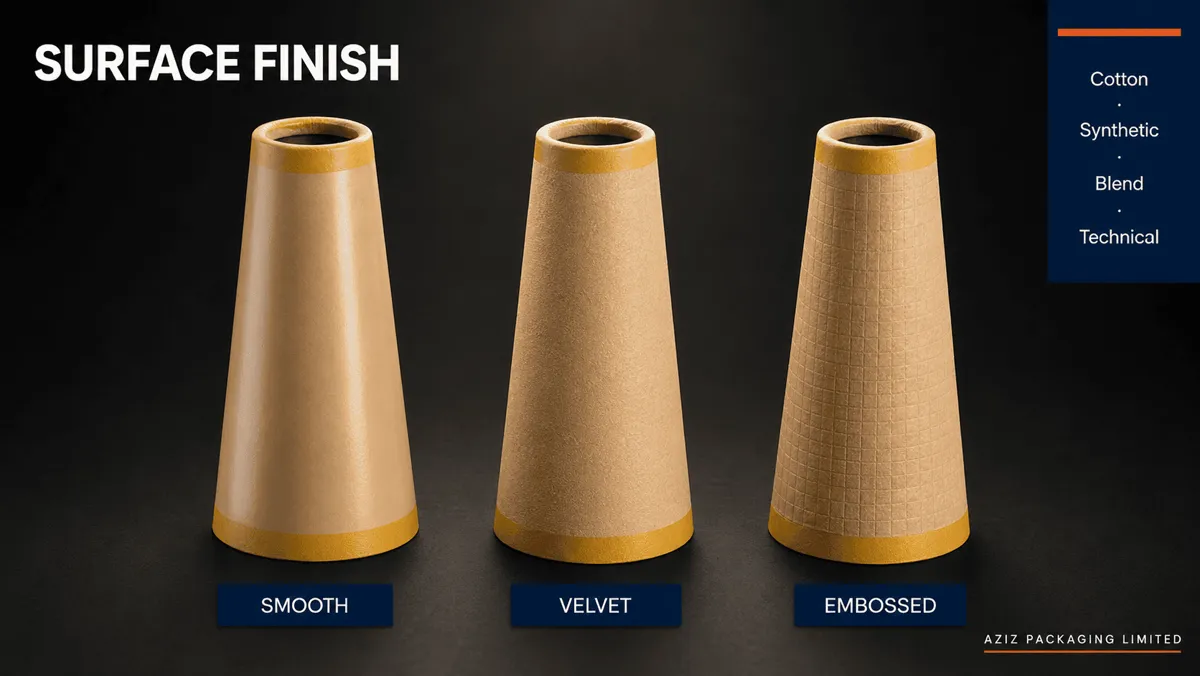
Compare surface finish and cleanliness with the approved sample. Check the yarn and starting settings with the machine team. Review whether the proposed finish has been trialled using the actual yarn. Do not assume one finish solves every slippage issue — a finish that grips a cotton yarn cleanly can still slip on a synthetic yarn of similar count, since grip depends on the fibre surface, not just the yarn's linear density.
Vibration or irregular package build
Check seating, rim condition, bore measurements and visible deformation. Inspect the holder and machine condition — a worn or damaged holder can produce the same vibration symptom as an out-of-spec cone, so ruling out the machine side is part of a proper diagnosis, not an afterthought. Trial the reference and suspect cone under comparable settings, recording observations without changing several variables at once.
Collapse or layer separation
Review visible damage, handling and moisture exposure, construction and agreed wall or strength results. Inspect the received cartons for crushing or wetting — moisture-weakened paper can pass a dry visual inspection and still collapse under winding tension once it absorbs ambient humidity on the floor. Quarantine affected stock while the mill and supplier review the evidence; increasing weight alone is not a demonstrated cure, since (as covered in our GSM vs finished weight guide) a heavier cone isn't automatically a stronger one if the underlying construction issue isn't addressed.
Doffing and yarn-tail problems
Check the approved notch geometry and position, the condition of the cone and the machine's operating setup. Do not infer the notch requirement from the brand name or a photograph. Confirm dimensions from the manual or accepted drawing — notch type varies even within a single machine brand's model range, so a notch that worked on one installation isn't a reliable guide for another without checking the specific doffer configuration.
Part 2: Yarn Breakage and Winding-Stability Problems
Yarn breakage and package instability during winding are frequently attributed to the cone by default, because the cone is the most visible physical component at the point of failure. Before treating it as a cone issue, work through the yarn and machine-side causes that produce identical symptoms.
Where in the cycle the break occurs
A break concentrated in the first few wound layers points toward a cone-surface or start-of-wind tension issue. A break that occurs consistently at the same point deeper into the package build is more often a tension-setting or yarn-quality issue than a cone issue, since the cone's contribution to the winding geometry doesn't change mid-package the way a machine tension setting or a weak point in the yarn itself can. Recording exactly where in the cycle a break happens, across several repeat failures, is more diagnostically useful than the fact that a break occurred at all.
Yarn-side checks before blaming the cone
Confirm the yarn count, twist and any known weak-spot history for the lot in use — yarn from a lot with inconsistent twist or count can break under normal winding tension regardless of what it's being wound onto. Check whether the same yarn lot breaks on more than one machine or only on the one currently under investigation; a fault that follows the yarn lot across machines points away from the cone.
Machine-side checks before blaming the cone
Review tensioner settings, guide alignment and winding speed against the machine's recommended settings for the yarn type in use. A tension setting appropriate for one yarn count can be excessive for a finer count run on the same machine without adjustment — this produces breakage that looks identical to a cone-grip problem but has nothing to do with the cone.
Package instability specifically
An unstable or misshapen package can result from cone taper mismatch (see our taper selection guide), from traverse or tension settings, or from the yarn itself building unevenly due to count variation. Isolate which by running the same yarn lot on a cone and machine combination known to be correct, and separately running an approved-good yarn lot on the machine and cone combination under question — whichever trial reproduces the instability tells you which side of the pairing is the actual cause.
Agree corrective action with evidence
Record the comparison and trial result, proposed change and acceptance criteria. Approve a revised sample or drawing before changing a repeat order. See the incoming QC checklist and specification fields.
Send your exact winding-machine model, reference cone or drawing, taper, finish, quantity and destination through our sample and quotation form. Include any special inspection or packing requirement so it can be confirmed in writing.