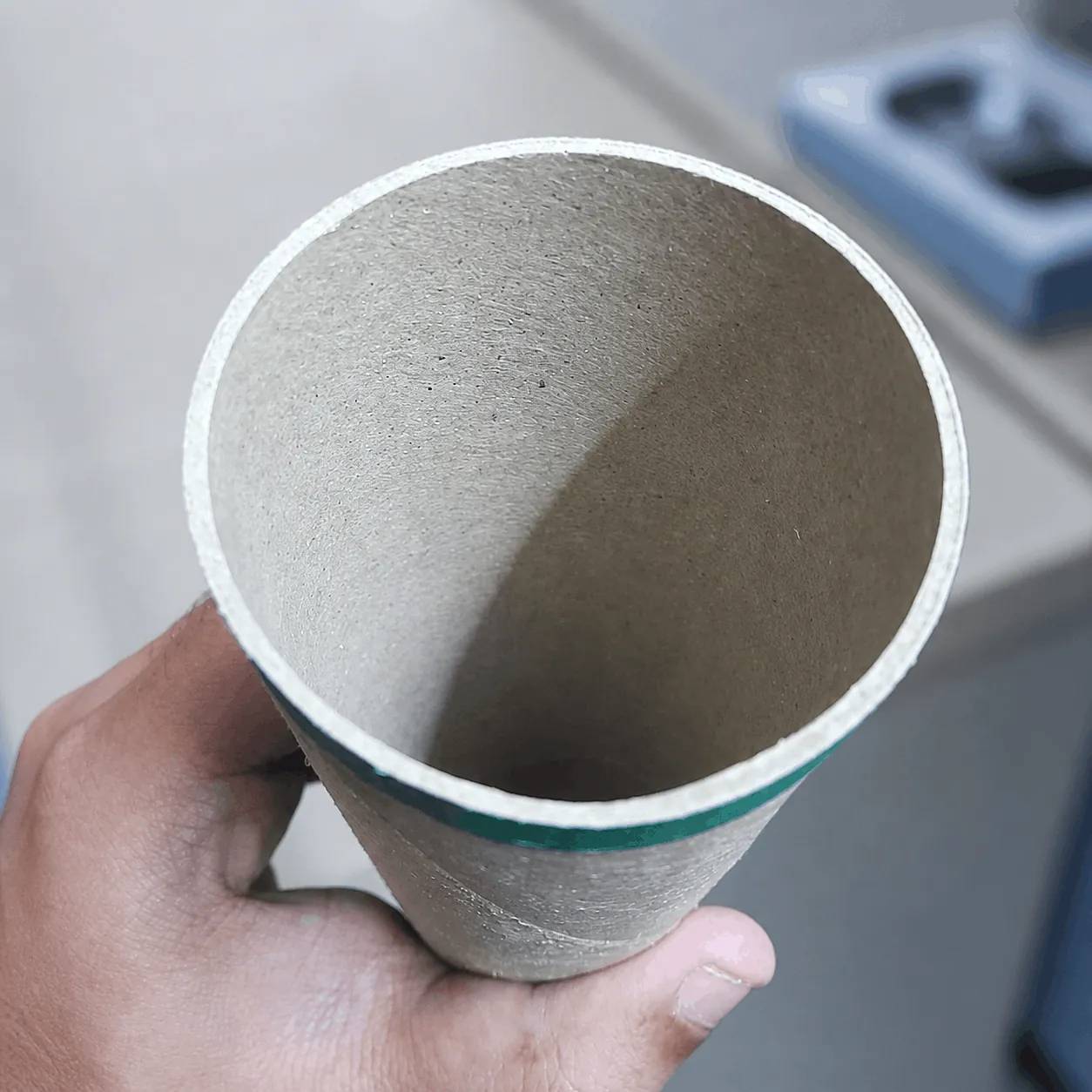
A paper bobbin and a paper cone usually refer to the same product, but technically a cone is tapered while a bobbin is parallel-sided — and for automatic winding machines, only the tapered cone is correct. In global textile sourcing conversations, "paper bobbin" and "paper cone" are used almost interchangeably — and in the large majority of cases, buyers using either term are asking about the same product: a kraft paper carrier used to wind yarn on a spinning or winding machine. The terminology split is regional and trade-channel driven rather than technical, but it is worth knowing precisely which shape each term is describing before you request a quote.
This guide explains where the overlap comes from, when "bobbin" specifically means something different from a tapered cone, which winding applications call for a taper versus a parallel tube, and which one a spinning mill actually needs to order. See our paper cones for yarn winding page for standard specifications.
Buyer Takeaway
If you are winding yarn on an autoconer, TFO twister, or ring-doubling machine, you need a tapered paper cone — not a parallel-sided bobbin — regardless of which term your supplier uses in conversation. Confirm the taper angle (4°20′ or 5°57′) in writing on the proforma invoice; the word choice in a sourcing conversation does not matter, but the shape and angle stamped on the specification sheet does.
Same Term, Different Regions: Why the Confusion Exists
The overlap exists because both terms describe the same broad category of product to a buyer unfamiliar with the underlying geometry: a rigid paper carrier that yarn is wound onto during spinning or winding. In South Asian manufacturing hubs — Bangladesh, India, Pakistan — machine manufacturers, spinning mills and paper cone producers overwhelmingly use "paper cone" or "yarn cone" in specification sheets, purchase orders and technical documentation. In parts of Europe and among general procurement platforms and trading intermediaries, "paper bobbin" is the more common search term and catalogue heading, often applied loosely to any paper yarn carrier regardless of its actual shape.
Search behaviour follows the same pattern. A buyer typing "paper bobbin manufacturer" into a search engine and a buyer typing "paper cone supplier" are frequently looking for the identical product — a kraft paper yarn carrier compatible with their winding machine. The practical consequence for a sourcing manager is straightforward: do not assume a supplier's terminology tells you anything about the product's actual geometry. Always confirm the shape and dimensions directly.
Bobbin vs Cone: The Actual Shape Difference
Strip away the regional terminology and there is a real, technical distinction underneath: a paper cone is tapered — its diameter narrows from base to nose along a specific angle — while a bobbin, in the strict technical sense, is parallel-sided, meaning its diameter stays constant along its full length, like a paper tube.
The taper on a paper cone is not cosmetic. It matches the spindle geometry of automatic winding machines, allowing the finished yarn package to be doffed (removed) from the machine without damaging the package or requiring the spindle to release its grip mechanically layer by layer. A parallel-sided tube does not doff the same way — it is more commonly associated with other stages of yarn and fabric processing where the package sits on a fixed spindle or in a creel rather than being ejected at speed from an automatic winding head.
In practice, when a spinning mill procurement manager says "paper bobbin" while discussing autoconer, TFO, or ring-doubling requirements, they almost always mean the tapered product. The parallel-tube meaning of "bobbin" is a separate, narrower technical usage that rarely applies to high-speed automatic winding. For the tapered product spinning mills actually order, see our paper cones for spinning mills page.
Which Applications Use Tapered Cones vs Parallel Tubes
Tapered paper cones are the standard yarn carrier for automatic winding machines — the equipment spinning mills use to wind yarn into packages ready for the next stage of production or for shipment. This includes autoconers (Schlafhorst, Murata/Muratec, Savio and similar brands), two-for-one (TFO) twisters, and ring-doubling machines. These machines are built around a specific taper angle, most commonly 4°20′ or 5°57′ depending on the machine model and application — see our paper cone specifications for the standard dimensional ranges across both angles.
Parallel-sided paper tubes serve a different set of applications elsewhere in the broader textile and packaging supply chain, including certain creel and beam-winding setups where a constant-diameter core is required rather than a taper. Aziz Packaging Limited does not manufacture parallel paper tubes; our production is dedicated entirely to tapered kraft paper cones for yarn winding. If your requirement is confirmed as a parallel tube rather than a taper, that falls outside our product range, and we will tell you so directly rather than offer an unsuitable substitute.
Paper Bobbin vs Paper Cone at a Glance
The table below summarises the practical distinction once the terminology is stripped away.
| Factor | Tapered Paper Cone | Parallel Paper Bobbin / Tube |
|---|---|---|
| Shape | Tapers from base to nose along a fixed angle | Constant diameter along the full length |
| Taper angle | 4°20′ or 5°57′ (industry-standard angles for automatic winders) | None — cylindrical |
| Typical use | Yarn winding on autoconers, TFO twisters, ring-doubling machines | Creel and beam-winding setups requiring a fixed-diameter core |
| Machine types | Schlafhorst Autoconer, Murata QPRO/Process Coner, Savio Orion/Polar/Espero, TFO twisters, ring-doubling machines | Non-automatic creel and beaming equipment |
What Aziz Packaging Manufactures
Aziz Packaging Limited manufactures tapered kraft paper cones — the product referred to by both terms, "paper bobbin" and "paper cone," among the buyers who contact us. Discuss taper, dimensions, finished weight, paper grade and finish against your approved sample or drawing. Full details are on our paper cones for yarn winding page. If you searched for a "paper bobbin manufacturer" and your requirement is yarn winding on an automatic winding machine, you are almost certainly looking for exactly this product — regardless of which term you used to find us.
Which One Does Your Mill Actually Need?
For any spinning mill running autoconer, TFO, or ring-doubling equipment, the answer is unambiguous: you need a tapered paper cone, matched to your machine's specified taper angle. The terminology your supplier uses in conversation is irrelevant to the outcome — what matters is that the shape, taper angle, dimensions and surface finish are confirmed in writing before you place an order. For a broader introduction to what a yarn cone is and how it fits into the winding process, see our guide on what a yarn cone is and how spinning mills use it.
If you are unsure whether your machine requires a tapered cone or a parallel tube, check your machine's specification sheet or the sample you are currently running — a tapered cone will visibly narrow from base to nose, while a parallel tube will not. When in doubt, send us a photo or the dimensions of your current cone and we will confirm the matching specification.
Aziz Packaging Limited manufactures kraft paper yarn cones — 4°20′ and 5°57′ tapers, smooth, velvet and embossed finishes — for spinning mills. Based in Narayanganj 1450, Bangladesh. Export-ready on FOB terms.
Looking for a reliable paper cone supplier?
Aziz Packaging Limited manufactures kraft paper yarn cones — 4°20′ and 5°57′ tapers, smooth, velvet and embossed finishes — for spinning mills. Based in Narayanganj 1450, Bangladesh. Export-ready on FOB terms.
See our paper cones for yarn winding →Frequently asked questions
Is a paper bobbin the same as a paper cone?
In the large majority of cases, yes — buyers using either term are asking about the same product. But strictly, a paper cone is tapered (its diameter narrows from base to nose), while a bobbin in the strict technical sense is parallel-sided with constant diameter.
Why does a paper cone need a taper instead of a parallel bobbin shape?
The taper matches the spindle geometry of automatic winding machines, allowing the finished yarn package to be doffed (removed) from the machine without damaging the package or requiring mechanical release layer by layer.
Which term should I use when requesting a quote — paper bobbin or paper cone?
The word choice does not matter, but the shape and angle do. Confirm the taper angle (4°20′ or 5°57′) in writing on the proforma invoice regardless of which term you or your supplier use in conversation.
Why do different regions use different terms for the same product?
In South Asian manufacturing hubs — Bangladesh, India, Pakistan — 'paper cone' or 'yarn cone' is standard in specification sheets and purchase orders. In parts of Europe and among trading intermediaries, 'paper bobbin' is the more common search term and catalogue heading.