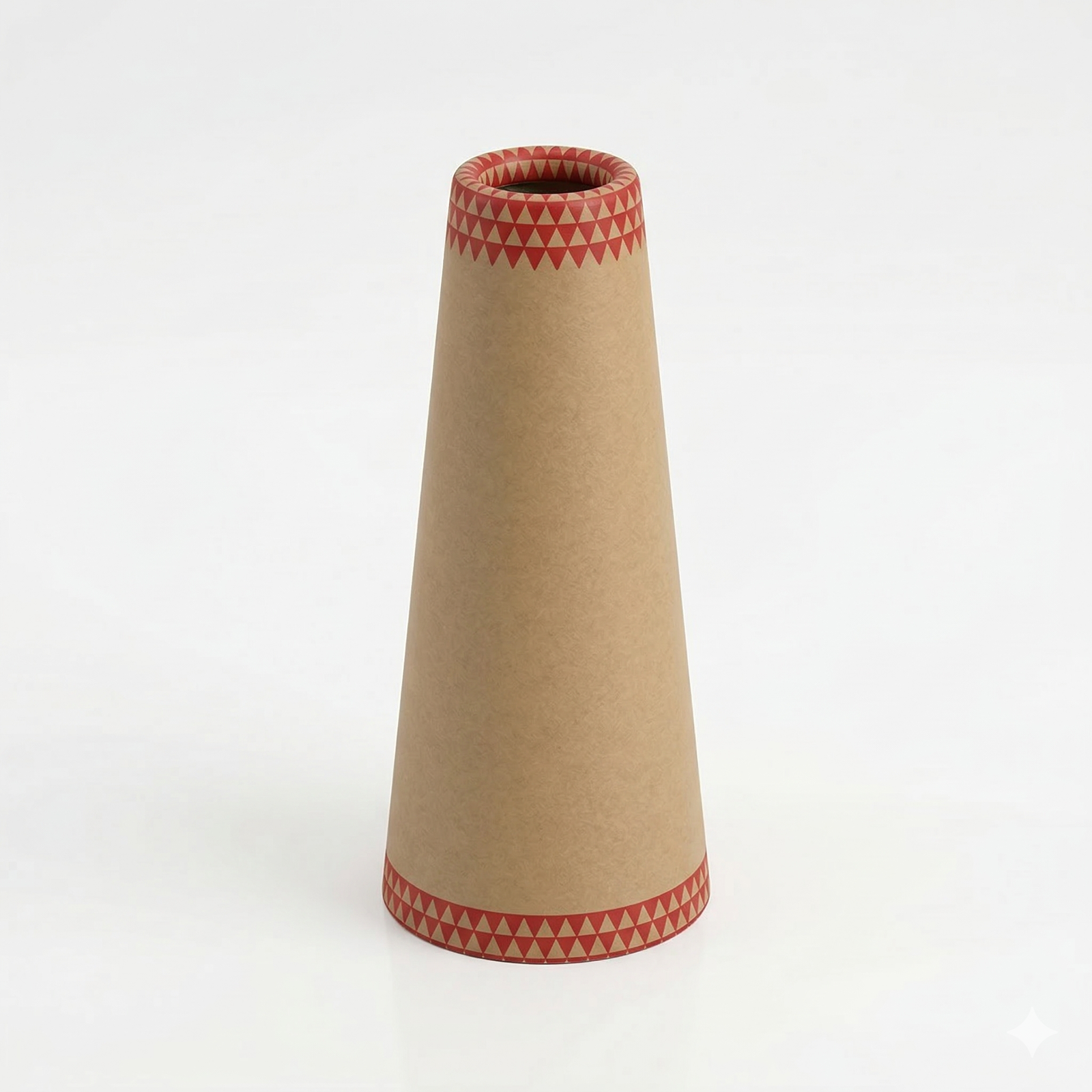
Textile Paper Cone Supplier Guide: What Spinning Mills Should Check Before Buying Yarn Cones
For a spinning mill, choosing a textile paper cone supplier is not only a purchasing decision. It is a production decision.
Paper cones are used continuously in yarn winding. If the supplier provides inconsistent quality, wrong dimensions or weak cones, the mill may face winding problems, package defects, downtime and unnecessary waste.
This guide explains what spinning mills should check before selecting a paper yarn cone supplier. See our paper cone for spinning mills page for the standard specification ranges referenced in this checklist.
Buyer Takeaway
A textile paper cone supplier must be evaluated on production criteria, not just price. The relevant questions are: does the supplier confirm taper angle and dimensional tolerances in writing? Can they provide batch-level quality data, not just a sample? Is their production method fully automated or manually operated? And can they demonstrate consistent output across multiple deliveries, not just the qualification batch? A supplier who cannot answer these questions clearly is unlikely to deliver predictable performance at volume.
1. Check the Cone Angle
The first thing to confirm is the cone angle. Common angles include:
- 4°20′ paper cone
- 5°57′ paper cone
These may also be written as:
- 4.20
- 4/20
- 5.57
- 5/57
The angle must match the machine requirement. If the angle is wrong, the cone may not fit properly during winding. This can create vibration, poor yarn tension and unstable package formation.
2. Check Standard Dimensions
Dimensions are very important in yarn winding cones. Buyers often search for sizes like 170mm cone, 172mm cone or 59 x 170 cone.
Before buying, mills should confirm:
- Cone length
- Top inside diameter
- Bottom inside diameter
- Cone angle
- Weight range
- Required packaging
A reliable supplier should be able to provide consistent dimensions across every batch.
3. Check Cone Strength
The cone must be strong enough to handle winding pressure, stacking and transport.
Weak cones may bend, collapse or deform. This can damage the yarn package and create production waste.
A good supplier should focus on crush resistance, shape retention and proper material quality.
4. Check Roundness and Balance
Roundness is one of the most important quality factors.
Poor cone roundness can create:
- Winding vibration
- Uneven yarn layering
- Sloughing
- Breakage
- Package deformation
For mills running high-speed winding, balanced cones are essential.
5. Check Surface Finish
The surface of the cone affects yarn holding, yarn release and package stability.
Depending on the yarn type, mills may need a surface that provides grip without damaging the yarn. Surface quality also helps reduce yarn tail loss and winding trouble.
Common surface-related search terms include:
- Velvet finish paper cone
- Grooved paper cone
- Smooth paper cone
- Printed yarn cone
6. Check Packaging and Delivery Reliability
Paper cones can be damaged during storage and transport if packaging is poor. A supplier should provide proper packaging to protect the cones from crushing, moisture and deformation.
Supply reliability is also critical. Spinning mills cannot afford production delays because cones are unavailable.
A strong supplier should offer:
- Consistent supply
- Clear communication
- Proper dispatch planning
- Reliable packaging
- Stable product quality
7. Check Supplier Experience with Spinning Mills
A textile paper cone supplier should understand the actual problems mills face. This includes machine compatibility, winding stability, yarn handling and production continuity.
The supplier should not only sell cones. They should understand how cones affect yarn winding performance.
8. Why Aziz Packaging Ltd.
Aziz Packaging Ltd. manufactures paper cones for yarn winding with focus on standard specifications, strength, consistency and reliable supply.
Our paper cones are designed for spinning mills that need stable winding performance, proper machine fit and dependable production support.
We supply standard paper cone specifications including 4°20′ and 5°57′ options, with attention to quality, strength and batch consistency.
Conclusion
When choosing a textile paper cone supplier, spinning mills should not focus only on price. They should check cone angle, dimensions, strength, roundness, surface finish, packaging and supply reliability.
The right supplier helps mills reduce winding problems, protect yarn quality and keep production running smoothly.
Related Guides
- The 2026 paper cone buyer's checklist — 18 specs to verify
- Complete paper cone specification guide for spinning mills
- 4°20′ and 5°57′ taper angles explained
Looking for a reliable paper cone supplier?
Aziz Packaging Limited manufactures kraft paper yarn cones — 4°20′ and 5°57′ tapers, smooth, velvet and embossed finishes — for spinning mills. Based in Narayanganj, Bangladesh. Export-ready FOB Chattogram.
See our paper cones for yarn winding →